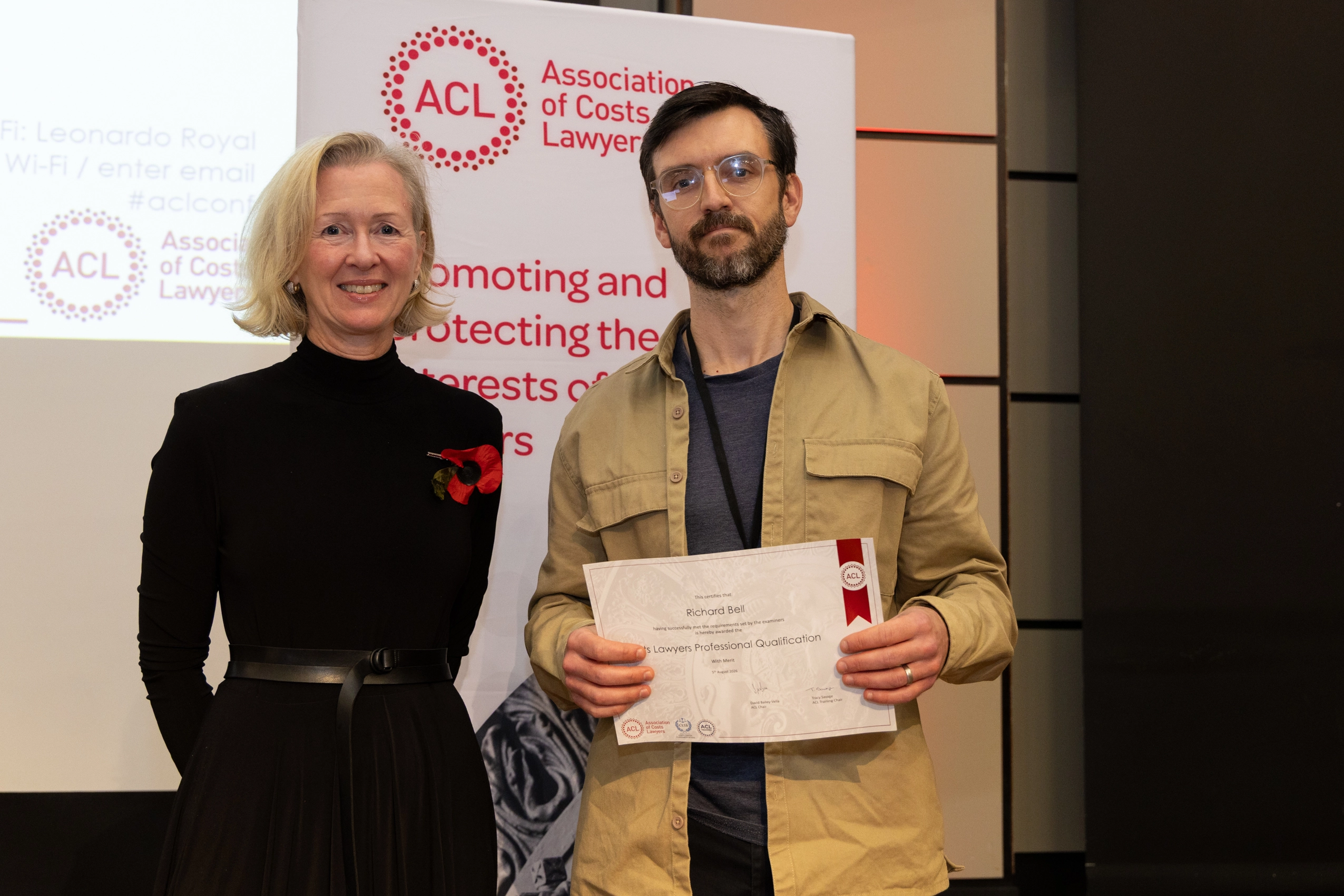
Biggest Take Aways!
‘Learn how to demolish your opponent’s point without being rude’ was my favourite takeaway from this year’s ACL Conference in London. It was one of the tips for new advocates given during a panel discussion at the event, which I had the privilege of attending.
Advocacy is something I’m keen to get better at, as a newly qualified costs lawyer. So I was eager to hear the views of Senior Costs Judge Rowley, Deputy Costs Judge Bedford, Costs Judge Joseph, Deputy Costs Judge Latham and District Judge Evans.
They were asked for advice for anyone looking to hone their advocacy skills. Deputy CJ Bedford opened the discussion with, ‘Do it’. Ridiculously simple, but it makes perfect sense. You have to go for it, she said. Have confidence in yourself and your ability to speak clearly and convey a position.
The panel said you should back yourself and your argument, but don’t interrupt the judge. Under any circumstances. That surprised me. Who in their right mind would interrupt the judge? Apparently, it is a thing. The chances of me making this mistake are, I can say confidently, zero. It tied into the next point they made, which was to keep your cool and prioritise getting on with your opponent. The panellists agreed it’s ‘incredibly frustrating’ when two advocates go at each other. Cattiness holds up hearings and brings progressive discussion to a halt.
It’s entirely possible, they said, to ‘beat up’ someone’s point while being respectful. Remember you’re taking aim at the stance, not the person. What do ad hominem attacks achieve?
Costs Judge Paul Joseph echoed this later in the conference, during a talk titled Judicial Dos and Don’ts. He urged attendees not to describe an opponent’s stance as ‘laughable’ in Points of Dispute or Replies. CJ Joseph said it's a term he sees all too often. Not only is it disrespectful, he said, but you're in hot water if the judge agrees with the ‘laughable’ point. You’ll be asked if you still think it's laughable.
Elsewhere in the discussion, the panel addressed the issue of nerves. All you can do, Deputy CJ Bedford said, is ‘smash’ the preparation. Nerves stem from lack of preparedness, from fear of embarrassment or getting it wrong. Organise your papers to easily locate specific documents when you need them. Try to think of eventualities or challenges that could come up and how you intend to address them. You’re more likely to make a mistake if you’re reacting to something for which you haven’t prepared.
They said don’t be afraid to ask for a moment to collect your thoughts. Take a quick breather to consult your papers, if you need it. When unsure, have the confidence to take a moment to respond.
Reflection is also important, the panel agreed. Watch other more experienced people to see how they do it. Make notes on your observations. Notice behaviours or particular turns of phrase or tactics you think could work for you. Reflect honestly on what you did and didn’t do well, what worked and didn’t work. Look at where your opponent succeeded.
Lastly, the panel said to understand that at the end of the day, you’re not going to win every point. Learn to read the room and don’t continue arguing after the judge has given a clear view or decision. One of the panellists said they once had to ask senior counsel to stop bickering. Know when to move on, and hope that if the judge gets a point wrong, they get it spectacularly wrong and give you a clear shot at the appeal route.